
湖上/中原中也
舟を浮べて出掛けませう。
波はヒタヒタ打つでせう、
風も少しはあるでせう。
櫂から滴垂る水の音は
昵懇しいものに聞こえませう、
――あなたの言葉の杜切れ間を。
すこしは降りても来るでせう、
われら接唇する時に
月は頭上にあるでせう。
よしないことや拗言や、
洩らさず私は聴くでせう、
――けれど漕ぐ手はやめないで。
舟を浮べて出掛けませう、
波はヒタヒタ打つでせう、
風も少しはあるでせう。
On the Lake / Chūya Nakahara
Literal Translation
If the moon floats into view,
Let’s set afloat a little boat.
The water will gently lap at the sides,
And there will be a little wind.
When we go deeper into the lake, it will grow dark.
The soft drip of water from the oar
Will sound like a dear companion—
The hush between your words.
The moon will listen in the stillness,
It may descend a little, too.
And as our lips softly meet,
It will hover just above.
Still, you’ll murmur—
Little sulks and whims.
I’ll listen to every word,
But don’t stop rowing.
If the moon floats into view,
Let’s set afloat a little boat.
The waves will gently lap again,
And there will be a little wind.
Poetic Translation
Now that the moon has quietly slipped into view,
Shall we set a little boat adrift, just the two of us?
The waves will whisper against the sides,
And perhaps, we’ll feel a touch of breeze.
As we drift farther into the dark of the lake,
a drop of water falls from the oar—
a sound close and familiar,
softly filling the hush your voice leaves behind.
Surely the moon is listening, quiet and unseen,
Perhaps it even drifts a little closer—
And when our lips gently meet,
It will be there, watching from above.
You’ll still murmur—
quiet protests, little whims.
I’ll take them all in.
—Just keep rowing, even through the dark.
Now that the moon has quietly slipped into view,
Shall we set a little boat adrift, just the two of us?
The waves will whisper against the sides,
And perhaps, we’ll feel a touch of breeze.
Some translations have been changed to make the lyrics.
Translation ©Tsukiyonokarasu, 2025
Original poem by Nakahara Chuya (Public Domain)
I’ve approached each poem with care and time—reading, translating, listening, and creating—always as a quiet collaboration with the poet.
These works reflect not just the poem itself, but also the moments of silence, discovery, and emotion that arose between us.
You’re invited into that space—not to copy, but to feel.
Listen on Soundcloud
Echoes from Chūya’s Ink
-
This page weaves together Chuya Nakahara’s Japanese translation of Rimbaud’s Sensation, my own English interpretation based on Nakahara’s text, and fragments of the original French poem. By blending these voices, the song becomes a layered conversation across time and language—an homage to the resonance between two poetic souls. Unfold the Rest
-
Nakahara Chuya’s poem Rinju (“At Deathbed”) is translated into English and reimagined through music. It depicts the quiet passage of a soul fading into the sky, a gentle elegy for what has been lost. The original poem, its translation, the translator’s notes, and the accompanying music and video together form a single, unified world. Unfold the Rest
-
Experience Nakahara Chuya’s Moonlit Shore in multiple forms—literal translation, interpretive rendering, musical adaptation, and a translator’s note reflecting on grief, memory, and poetic silence. Unfold the Rest


About Chūya Nakahara
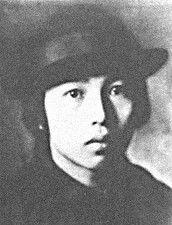
(1907–1937)
Chūya Nakahara was a Japanese poet known for his lyrical and emotionally resonant verse. Born in Yamaguchi Prefecture, he began writing poetry at a young age, influenced early on by French Symbolists such as Verlaine and Rimbaud. His work is marked by a deep musicality, reflecting both the rhythms of language and the undercurrents of personal grief.
Many of Nakahara’s poems explore themes of sorrow, loneliness, and impermanence—often drawn from his own experiences of loss, including the early death of his brother and his struggles with illness. Despite a short life—he died of tuberculosis at the age of 30—he left behind a body of work that continues to move readers with its delicate yet powerful expression.
Nakahara’s poetic voice stands apart in modern Japanese literature. With its blend of romantic sensitivity and avant-garde experimentation, his writing remains widely studied and admired in Japan. While less known internationally, his poetry is increasingly being appreciated through translation and cross-media interpretations.
This site presents selected works of Nakahara alongside musical and spoken-word adaptations, offering a new way to experience the poignant cadence of his poetry.