
幻影/中原中也
Phantom / Chūya Nakahara
薄命さうなピエロがひとり棲んでゐて、
それは、紗の服なんかを着込んで、
そして、月光を浴びてゐるのでした。
しきりと 手眞似をするのでしたが、
その意味が、つひぞ通じたためしはなく、
あわれげな 思ひをさせるばつかりでした。
古い影繪でも見てゐるやう――
音はちつともしないのですし、
何を云つてるのかは 分りませんでした。
あやしくもあかるい霧の中で、
かすかな姿態をゆるやかに動かしながら、
眼付ばかりはどこまでも、やさしさうなのでした。
Literal Translation
In my head, since some unknown time,
a frail-looking Pierrot has lived alone,
dressed in something like gauze clothing,
and it was bathed in moonlight.
At the slightest opportunity,
it would lift its frail hands and mime over and over,
yet its meaning never once got across,
and only left the Pierrot sorrowful.
Along with the miming, its lips also moved,
like seeing an old shadow play—
making no sound at all,
and I could not tell what it was saying.
Its body bathed in silvery white moonlight,
in a mist both ethereal and veiled,
moving its faint figure gently,
its gaze alone remained endlessly tender.
Poetic Translation
Inside my mind’s dim stage,
a fragile Pierrot lingers,
swathed in gauze-like robes,
always bathed in moonlight
Whenever my awareness turned toward it,
it raised its trembling hands again and again,
rehearsing the same mute pantomime—
a plea I could never understand,
and my incomprehension left the Pierrot in sorrow.
And with each gesture, its lips would at last begin to move—
like an ancient shadow-play unfolding—
yet no sound ever reached me,
nor ever its meaning.
Pale in the moonlight, its slight form,
within a veiled and ethereal mist,
faintly moving, a wisp of presence lingering—
and only its gaze remained endlessly tender.
Japan’s Modernist Master
The Poetry of Chuya Nakahara
by Chuya Nakahara (Author),
Christian Nagle (Translator),
Mikiro Sasaki (Foreword)
This book features Chuya Nakahara’s representative poetry collections, The Song of the Goat and Songs of Days Past, presenting the original Japanese texts alongside English translations. The translations are crafted by Christian Nagle, a poet and musician, whose keen sensibility and poetic skill vividly bring Nakahara’s work to life. Additionally, the foreword by Mikiro Sasaki provides readers with deeper insight into Nakahara’s poetic world.
Moreover, the book includes bonus bilingual audio recordings of Nakahara’s poems, allowing readers to experience the rhythm and intonation of his verse firsthand.
Variations
Echoes from Chūya’s Ink
-
Sensation
This page weaves together Chuya Nakahara’s Japanese translation of Rimbaud’s Sensation, my own English interpretation based on Nakahara’s text, and fragments of the original French poem.
By blending these voices, the song becomes a layered conversation across time and language—an homage to the resonance between two poetic souls. -
Deathbed
Nakahara Chuya’s poem Rinju (“At Deathbed”) is translated into English and reimagined through music.
It depicts the quiet passage of a soul fading into the sky, a gentle elegy for what has been lost.
The original poem, its translation, the translator’s notes, and the accompanying music and video together form a single, unified world. -



About Chūya Nakahara
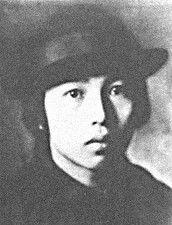
(1907–1937)
Chūya Nakahara was a Japanese poet known for his lyrical and emotionally resonant verse. Born in Yamaguchi Prefecture, he began writing poetry at a young age, influenced early on by French Symbolists such as Verlaine and Rimbaud. His work is marked by a deep musicality, reflecting both the rhythms of language and the undercurrents of personal grief.
Many of Nakahara’s poems explore themes of sorrow, loneliness, and impermanence—often drawn from his own experiences of loss, including the early death of his brother and his struggles with illness. Despite a short life—he died of tuberculosis at the age of 30—he left behind a body of work that continues to move readers with its delicate yet powerful expression.
Nakahara’s poetic voice stands apart in modern Japanese literature. With its blend of romantic sensitivity and avant-garde experimentation, his writing remains widely studied and admired in Japan. While less known internationally, his poetry is increasingly being appreciated through translation and cross-media interpretations.
This site presents selected works of Nakahara alongside musical and spoken-word adaptations, offering a new way to experience the poignant cadence of his poetry.