
詩人は辛い/中原中也
誰が歌なぞ歌ふものか
聴いてるやうなふりだけはする
歌なぞどうだつてかまはないのだ
そして盛んに拍手を送る
もう沢山といつた顔
こんな御都合な世の中に歌なぞ歌はない
The Poet is Tired / Chūya Nakahara
Literal Translation
I no longer sing songs.
Who would I bother singing such things for?
No one truly listens to songs—
They only pretend to be listening.
Everyone just carries a cold heart,
And cares nothing for songs at all.
Yet they still pretend to listen,
And they clap for me so enthusiastically.
So when I try to sing another,
They give me a look: “That’s quite enough.”
I will sing no more—
In a world so convenient for itself.
Poetic Translation – No Likes, No Sing
What if Nakahara Chuuya posted on Twitter?
@chūya_nakahara · Sep 19, 1935
Singing? That’s done. For good.
You never really listened—
just nodded, just clapped.
Fake applause can’t fill silence.
I’m not your background soundtrack.
I sang one more.
You looked like: “Ugh, again?”
Fine then.
No music.
No me.
No encore.
Translation ©Tsukiyonokarasu, 2025
Original poem by Nakahara Chuya (Public Domain)
I’ve approached each poem with care and time—reading, translating, listening, and creating—always as a quiet collaboration with the poet.
These works reflect not just the poem itself, but also the moments of silence, discovery, and emotion that arose between us.
You’re invited into that space—not to copy, but to feel.
Japan’s Modernist Master
The Poetry of Chuya Nakahara
by Chuya Nakahara (Author),
Christian Nagle (Translator),
Mikiro Sasaki (Foreword)
This book features Chuya Nakahara’s representative poetry collections, The Song of the Goat and Songs of Days Past, presenting the original Japanese texts alongside English translations. The translations are crafted by Christian Nagle, a poet and musician, whose keen sensibility and poetic skill vividly bring Nakahara’s work to life. Additionally, the foreword by Mikiro Sasaki provides readers with deeper insight into Nakahara’s poetic world.
Moreover, the book includes bonus bilingual audio recordings of Nakahara’s poems, allowing readers to experience the rhythm and intonation of his verse firsthand.
Variations
Listen on Bandcamp
You can also listen on Bandchamp. If you like it, feel free to set a price or buy it. Your support helps keep this project going.
Echoes from Chūya’s Ink
-
This page weaves together Chuya Nakahara’s Japanese translation of Rimbaud’s Sensation, my own English interpretation based on Nakahara’s text, and fragments of the original French poem. By blending these voices, the song becomes a layered conversation across time and language—an homage to the resonance between two poetic souls. Unfold the Rest
-
Nakahara Chuya’s poem Rinju (“At Deathbed”) is translated into English and reimagined through music. It depicts the quiet passage of a soul fading into the sky, a gentle elegy for what has been lost. The original poem, its translation, the translator’s notes, and the accompanying music and video together form a single, unified world. Unfold the Rest
-
Experience Nakahara Chuya’s Moonlit Shore in multiple forms—literal translation, interpretive rendering, musical adaptation, and a translator’s note reflecting on grief, memory, and poetic silence. Unfold the Rest


About Chūya Nakahara
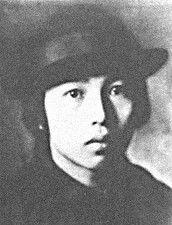
(1907–1937)
Chūya Nakahara was a Japanese poet known for his lyrical and emotionally resonant verse. Born in Yamaguchi Prefecture, he began writing poetry at a young age, influenced early on by French Symbolists such as Verlaine and Rimbaud. His work is marked by a deep musicality, reflecting both the rhythms of language and the undercurrents of personal grief.
Many of Nakahara’s poems explore themes of sorrow, loneliness, and impermanence—often drawn from his own experiences of loss, including the early death of his brother and his struggles with illness. Despite a short life—he died of tuberculosis at the age of 30—he left behind a body of work that continues to move readers with its delicate yet powerful expression.
Nakahara’s poetic voice stands apart in modern Japanese literature. With its blend of romantic sensitivity and avant-garde experimentation, his writing remains widely studied and admired in Japan. While less known internationally, his poetry is increasingly being appreciated through translation and cross-media interpretations.
This site presents selected works of Nakahara alongside musical and spoken-word adaptations, offering a new way to experience the poignant cadence of his poetry.