
サーカス/中原中也
※※茶色い戦争ありました
※※冬は疾風吹きました
※※今夜此処での一と殷盛り
※※※※今夜此処での一と殷盛り
※※ そこに一つのブランコだ
見えるともないブランコだ
※※汚れ木綿の屋蓋のもと
ゆあーん ゆよーん ゆやゆよん
※※安値いリボンと息を吐き
※※咽喉が鳴ります牡蠣殻と
ゆあーん ゆよーん ゆやゆよん
※※※※夜は劫々と更けまする
※※※※落下傘奴のノスタルヂアと
※※※※ゆあーん ゆよーん ゆやゆよん
Circus / Chūya Nakahara
Literal Translation
Several ages have occurred,
There was a brown war.
Several ages have occurred,
A winter gale blew.
Several ages have occurred,
A single revel tonight, here.
A single revel tonight, here.
The circus tent has tall beams.
There is a single swing there.
A swing hardly visible.
Suspended headfirst, arms trailing,
under the dingy cotton roof.
Yuaan, yuyoon, yuyayuyon.
Near it, a white light exhales
with a cheap ribbon.
The audience are all sardines,
their throats clink like oyster shells.
Yuaan, yuyoon, yuyayuyon.
Outside is pitch black—the darkness of darkness.
The night deepens endlessly.
With the nostalgia of the falling man, parachuted in.
Yuaan, yuyoon, yuyayuyon.
Poetic Translation
Several ages have gone by,
A war, faded like sepia at one point, existed.
Through several ages,
there was a time when… A harsh season brought a cold, strong wind at times.
Through several ages, and now,
A heartfelt lingering on memories tonight, here.
Savoring these memories deeply, here tonight.
This “circus tent” has high beams,
And there, a single swing,
A swing that was hard to see.
Upside down, hands hanging low, Like an acrobat suspended, hands reaching down.
Underneath the soiled cotton awning, Beneath the grimy canvas that covers.
ゆあーん [jɯ.äːɴ]
ゆよーん[jɯ.joːɴ]
ゆやゆよん[jɯ.ja.jɯ.joɴ]
A white light nearby,
Seemed to fade away with a cheap ribbon.
They looked like a dense school of sardines, the spectators.
Their cheering sounds like the scraping of oyster shells.
ゆあーん [jɯ.äːɴ]
ゆよーん[jɯ.joːɴ]
ゆやゆよん[jɯ.ja.jɯ.joɴ]
Outside, utter darkness, a darkness profound,
The night deepens endlessly, slowly.
Accompanied by the longing of this “parachute drifter,” With the self-pitying nostalgia of one who fell from the trapeze.
ゆあーん [jɯ.äːɴ]
ゆよーん[jɯ.joːɴ]
ゆやゆよん[jɯ.ja.jɯ.joɴ]
Translation ©Tsukiyonokarasu, 2025
Original poem by Nakahara Chuya (Public Domain)
I’ve approached each poem with care and time—reading, translating, listening, and creating—always as a quiet collaboration with the poet.
These works reflect not just the poem itself, but also the moments of silence, discovery, and emotion that arose between us.
You’re invited into that space—not to copy, but to feel.
Variations
Echoes from Chūya’s Ink
-
This page weaves together Chuya Nakahara’s Japanese translation of Rimbaud’s Sensation, my own English interpretation based on Nakahara’s text, and fragments of the original French poem. By blending these voices, the song becomes a layered conversation across time and language—an homage to the resonance between two poetic souls. Unfold the Rest
-
Nakahara Chuya’s poem Rinju (“At Deathbed”) is translated into English and reimagined through music. It depicts the quiet passage of a soul fading into the sky, a gentle elegy for what has been lost. The original poem, its translation, the translator’s notes, and the accompanying music and video together form a single, unified world. Unfold the Rest
-
Experience Nakahara Chuya’s Moonlit Shore in multiple forms—literal translation, interpretive rendering, musical adaptation, and a translator’s note reflecting on grief, memory, and poetic silence. Unfold the Rest


About Chūya Nakahara
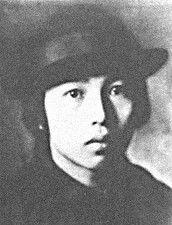
(1907–1937)
Chūya Nakahara was a Japanese poet known for his lyrical and emotionally resonant verse. Born in Yamaguchi Prefecture, he began writing poetry at a young age, influenced early on by French Symbolists such as Verlaine and Rimbaud. His work is marked by a deep musicality, reflecting both the rhythms of language and the undercurrents of personal grief.
Many of Nakahara’s poems explore themes of sorrow, loneliness, and impermanence—often drawn from his own experiences of loss, including the early death of his brother and his struggles with illness. Despite a short life—he died of tuberculosis at the age of 30—he left behind a body of work that continues to move readers with its delicate yet powerful expression.
Nakahara’s poetic voice stands apart in modern Japanese literature. With its blend of romantic sensitivity and avant-garde experimentation, his writing remains widely studied and admired in Japan. While less known internationally, his poetry is increasingly being appreciated through translation and cross-media interpretations.
This site presents selected works of Nakahara alongside musical and spoken-word adaptations, offering a new way to experience the poignant cadence of his poetry.