Moonlit Beach

Tsukiyo no Hamabe / Chūya Nakahara

月夜の晩に、ボタンが一つ
波打際に、落ちてゐた。
それを拾つて、役立てようと
僕は思つたわけでもないが
なぜだかそれを捨てるに忍びず
僕はそれを、袂に入れた。
月夜の晩に、ボタンが一つ
波打際に、落ちてゐた。
それを拾つて、役立てようと
僕は思つたわけでもないが
月に向つてそれは抛れず
浪に向つてそれは抛れず
僕はそれを、袂に入れた。
月夜の晩に、拾つたボタンは
指先に沁み、心に沁みた。
月夜の晩に、拾つたボタンは
どうしてそれが、捨てられようか?

Literal Translation

On a moonlit night, a single button
at the water’s edge, had fallen.

To pick it up and make use of it—
I didn’t exactly think that,
but somehow, I could not find it in me to throw it away
so I put it into my sleeve.

On a moonlit night, a single button
at the water’s edge, had fallen.

To pick it up and make use of it—
I didn’t exactly think that,

toward the moon, I could not cast it
toward the waves, I could not cast it

so I put it into my sleeve.

The button I picked up on a moonlit night
seeped into my fingertips, seeped into my heart

The button I picked up on a moonlit night—
how could it ever be thrown away?

Poetic Translation

On a moonlit night—
a button, alone,
lay at the shore.

I hadn’t meant to use it,
hadn’t thought to make it mine—
but I couldn’t throw it toward the moon,
and of course, not to the waves.
So I tucked it gently into my sleeve.

On a moonlit night—
a button, alone,
waiting at the shore.

I didn’t mean to keep it,
didn’t plan to make it mine—

but I couldn’t throw it toward the moon,
and of course, not to the waves.

So I tucked it softly into my sleeve.

The button I found that moonlit night—
as if it had waited at the shore—
it sank into my fingertips,
and quietly merged with my heart.

The button I found that moonlit night—
as if it had waited at the shore—
how could I ever let it go?

This note is a reflection on the balance between fidelity and poetic resonance, while situating the poem within Chuya’s grief and memory.

This translation is a poetic rendering of Nakahara Chuya’s Tsukiyo no Hamabe (Moonlit Shore), beginning with a literal approach and gradually evolving into an interpretive version. Throughout the process, I sought to preserve the original Japanese word order and rhythm while shaping the English into a poem that breathes with its own quiet music.

What mattered most was honoring the emotional ambiguity and silent resonance embedded in Chuya’s lines—his pauses, his repetitions, and his unsaid grief.

🌙 Context and Interpretation

It’s said that Chuya wrote this poem after the death of his young son. If so, Moonlit Shore becomes not just a meditation on memory, but a quiet reckoning with loss. In this translation, I treated the button as a symbol of remembrance—something small, almost trivial, yet impossible to discard.

The button lying at the edge of the waves is not merely found—it feels as if it had been waiting. The act of picking it up is not deliberate, but instinctive, as if the speaker were drawn to it by something deeper than reason. The button seeps through the fingertips and merges with the heart: a moment when physical contact becomes emotional fusion.

One way to understand the significance of the button is to see it as a symbol of connection.
By picking it up, the speaker re-establishes a link with memories and the self, as if binding together what was once lost.
If we accept that this poem reflects Chuya’s grief over the loss of his child, then the button represents a pivotal moment: emerging from the deep sea of sorrow, the speaker finally walks along the moonlit shore.
In that moment, the memory and the self meet and intertwine, and this memory can never drift away again.

The final line—“how could I ever let it go?”—is not a declaration, but a whispered thought. It’s not spoken to anyone, yet it feels like it’s meant to be heard. It carries the weight of memory returning, of something lost becoming part of the self again

💧 Intent and Craft

  • Preserving ambiguity
    Phrases like “I didn’t mean to keep it” reflect the speaker’s hesitation and emotional complexity. The translation avoids firm declarations, allowing space for quiet contradiction.
  • Repetition as resonance
    The repeated stanza mirrors the Japanese original, reinforcing the emotional echo and the sense of inevitability.
  • Gentle phrasing
    “Tucked it gently into my sleeve” was chosen to convey tenderness, as if the speaker were storing a memory with care.
  • Poetic silence
    Line breaks and pauses were used to recreate the rhythm of Chuya’s original, where silence often speaks louder than words.

While translating this poem, I found myself in tears.
It wasn’t just the words—it was the silence between them, the grief that lingers without explanation.
This poem feels like a quiet walk along the shore of memory, where something lost is finally allowed to return.

For the last stanza, if I had let my personal feelings take the lead, it would have been:
The button I found that moonlit night—
Now it belongs within me; it will never be apart again.

But I left it as it was, hoping the quiet afterglow would linger for the reader.

I hope Chuya’s voice may reach across languages and time, and touch another heart as it touched mine.

🐚A Final Reflection: The Quiet Acceptance of Loss

In the literal translation, the line “How could I ever let it go?” is not meant as a firm declaration like “I won’t throw it away” or “There’s no way I could.”
Instead, it carries a quiet hesitation—a reluctance to say anything definite, as if the speaker himself isn’t sure what he feels, only that he cannot let go.

In my interpretive version, I wanted to offer a warmer nuance:
as if the button had returned to a part of my heart, and now it will never leave.

Seeing the button as a fragment of memory or remembrance deepens this feeling.
It’s not just about keeping something—it’s about recalling, reclaiming, and quietly accepting what was once lost.

Chuya seemed emotionally fragile after the death of his son.
If this poem reflects that grief, it feels as though he is finally able to immerse himself in those memories—
not to escape the pain, but to allow a moment of quiet connection with his lost child.

Thinking of it this way, I felt as if I had touched Chuya’s heart.
And the tears came.

This note reflects my personal reading of the poem at this moment, offered not as a definitive analysis, just one way of listening to Chuya’s voice.

Translation ©Tsukiyonokarasu, 2025
Original poem by Nakahara Chuya (Public Domain)

I’ve approached each poem with care and time—reading, translating, listening, and creating—always as a quiet collaboration with the poet.
These works reflect not just the poem itself, but also the moments of silence, discovery, and emotion that arose between us.

You’re invited into that space—not to copy, but to feel.

Echoes from Chūya’s Ink

  • This page weaves together Chuya Nakahara’s Japanese translation of Rimbaud’s Sensation, my own English interpretation based on Nakahara’s text, and fragments of the original French poem. By blending these voices, the song becomes a layered conversation across time and language—an homage to the resonance between two poetic souls. Unfold the Rest

  • Nakahara Chuya’s poem Rinju (“At Deathbed”) is translated into English and reimagined through music. It depicts the quiet passage of a soul fading into the sky, a gentle elegy for what has been lost. The original poem, its translation, the translator’s notes, and the accompanying music and video together form a single, unified world. Unfold the Rest

  • Experience Nakahara Chuya’s Moonlit Shore in multiple forms—literal translation, interpretive rendering, musical adaptation, and a translator’s note reflecting on grief, memory, and poetic silence. Unfold the Rest

About Chūya Nakahara
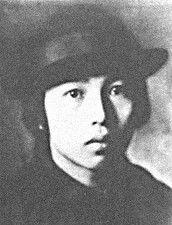
Chūya Nakahara
(1907–1937)

Chūya Nakahara was a Japanese poet known for his lyrical and emotionally resonant verse. Born in Yamaguchi Prefecture, he began writing poetry at a young age, influenced early on by French Symbolists such as Verlaine and Rimbaud. His work is marked by a deep musicality, reflecting both the rhythms of language and the undercurrents of personal grief.

Many of Nakahara’s poems explore themes of sorrow, loneliness, and impermanence—often drawn from his own experiences of loss, including the early death of his brother and his struggles with illness. Despite a short life—he died of tuberculosis at the age of 30—he left behind a body of work that continues to move readers with its delicate yet powerful expression.

Nakahara’s poetic voice stands apart in modern Japanese literature. With its blend of romantic sensitivity and avant-garde experimentation, his writing remains widely studied and admired in Japan. While less known internationally, his poetry is increasingly being appreciated through translation and cross-media interpretations.

This site presents selected works of Nakahara alongside musical and spoken-word adaptations, offering a new way to experience the poignant cadence of his poetry.

Send an echo