
骨/中原中也
Hone / Chūya Nakahara
生きてゐた時の苦勞にみちた
あのけがらはしい肉を破つて、
しらじらと雨に洗はれ、
ヌックと出た、骨の尖。
ただいたづらにしらじらと、
雨を吸収する、
風に吹かれる、
幾分空を反映する。
これが食堂の雜踏の中に、
坐つてゐたこともある、
みつばのおしたしを食つたこともある、
と思へばなんとも可笑しい。
見てゐるのは僕? 可笑しなことだ。
靈魂はあとに殘つて、
また骨の処にやつて来て、
見てゐるのかしら?
半ばは枯れた草に立つて、
見てゐるのは、――僕?
恰度立札ほどの高さに、
骨はしらじらととんがつてゐる。
Literal Translation
See, see! These are my bones.
Filled with the hardships of when I was alive,
Tearing through that filthy flesh,
Washed pale by the rain,
Out it popped—bone’s tip.
It has no gloss,
It simply sits there, pale and blank,
Absorbing the rain,
Blown by the wind,
Somewhat reflecting the sky.
When I was alive,
This sat in the bustle of a cafeteria,
Sat there once,
Even ate mitsuba oshitashi1,
And thinking that—how absurd it is.
See, see! These are my bones—
Is it me who’s watching? How absurd.
The soul remained behind,
And came back to where the bones are,
Is it watching now, I wonder?
By the stream in my hometown,
Standing half in withered grass,
Is it watching—me?
At just the height of a signpost,
The bone juts out—pale and pointed.
Poetic Translation
Hey, look—this is my bone.
It broke through that filthy flesh,
that body, swollen with all the hardship of life.
The rain kept falling, washing it clean,
and slowly—
it revealed itself, inevitable,
the tip of the bone. Pale. Silent.
No shine to it—
just lying there, quietly pale.
It drinks the rain,
lets the wind pass through,
and maybe, just maybe,
it watches the sky.
Back when it wore that filthy flesh,
this bone used to sit in a crowded cafeteria,
chewing on its favorite—mitsuba oshitashi.
It was alive, it had habits,
and thinking of that now…
I can’t help but laugh.
Hey, look—these bones? They’re mine.
And the one staring at them… is that me?
What a ridiculous thought.
Maybe my soul stuck around,
drifted back to this pile of bones,
just to gawk at itself.
By the stream back home,
half-lost in brittle grass,
someone’s standing there—
is it me?
At signpost height,
a bone juts pale and sharp,
indifferent, inevitable.
- “Mitsuba oshitashi” refers to a simple Japanese dish of boiled mitsuba, a leafy herb called trefoil, lightly seasoned. It is said to have been a favorite of Nakahara Chuya. ↩︎
Translation ©Tsukiyonokarasu, 2025
Original poem by Nakahara Chuya (Public Domain)
I’ve approached each poem with care and time—reading, translating, listening, and creating—always as a quiet collaboration with the poet.
These works reflect not just the poem itself, but also the moments of silence, discovery, and emotion that arose between us.
You’re invited into that space—not to copy, but to feel.
Echoes from Chūya’s Ink
-
This page weaves together Chuya Nakahara’s Japanese translation of Rimbaud’s Sensation, my own English interpretation based on Nakahara’s text, and fragments of the original French poem. By blending these voices, the song becomes a layered conversation across time and language—an homage to the resonance between two poetic souls. Unfold the Rest
-
Nakahara Chuya’s poem Rinju (“At Deathbed”) is translated into English and reimagined through music. It depicts the quiet passage of a soul fading into the sky, a gentle elegy for what has been lost. The original poem, its translation, the translator’s notes, and the accompanying music and video together form a single, unified world. Unfold the Rest
-
Experience Nakahara Chuya’s Moonlit Shore in multiple forms—literal translation, interpretive rendering, musical adaptation, and a translator’s note reflecting on grief, memory, and poetic silence. Unfold the Rest


About Chūya Nakahara
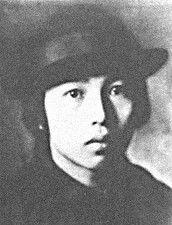
(1907–1937)
Chūya Nakahara was a Japanese poet known for his lyrical and emotionally resonant verse. Born in Yamaguchi Prefecture, he began writing poetry at a young age, influenced early on by French Symbolists such as Verlaine and Rimbaud. His work is marked by a deep musicality, reflecting both the rhythms of language and the undercurrents of personal grief.
Many of Nakahara’s poems explore themes of sorrow, loneliness, and impermanence—often drawn from his own experiences of loss, including the early death of his brother and his struggles with illness. Despite a short life—he died of tuberculosis at the age of 30—he left behind a body of work that continues to move readers with its delicate yet powerful expression.
Nakahara’s poetic voice stands apart in modern Japanese literature. With its blend of romantic sensitivity and avant-garde experimentation, his writing remains widely studied and admired in Japan. While less known internationally, his poetry is increasingly being appreciated through translation and cross-media interpretations.
This site presents selected works of Nakahara alongside musical and spoken-word adaptations, offering a new way to experience the poignant cadence of his poetry.