
都会の夏の夜/中原中也
街角に建物はオルガンのやうに、
遊び疲れた男どち唱ひながらに歸つてゆく。
――イカムネ・カラアがまがつてゐる――
その心は何か悲しい。
頭が暗い土塊になつて、
ただもうラアラア唱つてゆくのだ。
忘れてゐるといふではないが、
都會の夏の夜の更――
眼に外燈の滲みいれば
ただもうラアラア唱つてゆくのだ。
tokai no natsu no yoru / Chūya Nakahara
Literal Translation
The moon is like a medal in the sky,
Buildings at street corners are like organs,
The men, weary from play, head home, singing as they go.
—Their ikamune collars bent and askew.—
Their lips hang wide open,
Their hearts somehow sorrowful.
Their heads, dark lumps of earth,
Just singing laa laa — that’s all they can do.
Matters of business and ancestors—
They haven’t forgotten.
But the summer night keeps deepening in this urban hush.
With dead gunpowder settling,
And streetlights blurring in their eyes,
And still — just laa laa, that’s all they can do.
Poetic Translation
The moon, flat and gleaming, like a medal hung in the sky.
Buildings loom at the corners, black and silent—like organs lost in shadow.
Men, weary from their evening obligations, drift home, humming hollow tunes.
—Their ikamune collars† bent out of shape.—
Their loose lips parted like wounds,
and their sorrow spilled out into the urban night.
Their heads like lumps of shadowed clay—
the sound of laa laa, faint and deep, spilling out from within.
They haven’t forgotten—
not the deals struck,
nor the place they once came from,
nor the selves they carried beneath it all.
But the urban summer night draws on,
and all of it sinks beneath the hour’s slow breath.
Their eyes blurred—not from tears,
but from the stillness of the light.
Still they sang, laa laa, into the breathless dark.
† Ikamune collars refer to formal dress shirts typically worn beneath a tuxedo or tailcoat, featuring a stiff, starched bosom—the front chest panel of the shirt, once emblematic of social propriety in early 20th-century Japan.
Translation ©Tsukiyonokarasu, 2025
Original poem by Nakahara Chuya (Public Domain)
I’ve approached each poem with care and time—reading, translating, listening, and creating—always as a quiet collaboration with the poet.
These works reflect not just the poem itself, but also the moments of silence, discovery, and emotion that arose between us.
You’re invited into that space—not to copy, but to feel.
Variations
Urban Summer Night (English Vocal Version) — Inspired by the same poem by Chuya Nakahara
Echoes from Chūya’s Ink
-
This page weaves together Chuya Nakahara’s Japanese translation of Rimbaud’s Sensation, my own English interpretation based on Nakahara’s text, and fragments of the original French poem. By blending these voices, the song becomes a layered conversation across time and language—an homage to the resonance between two poetic souls. Unfold the Rest
-
Nakahara Chuya’s poem Rinju (“At Deathbed”) is translated into English and reimagined through music. It depicts the quiet passage of a soul fading into the sky, a gentle elegy for what has been lost. The original poem, its translation, the translator’s notes, and the accompanying music and video together form a single, unified world. Unfold the Rest
-
Experience Nakahara Chuya’s Moonlit Shore in multiple forms—literal translation, interpretive rendering, musical adaptation, and a translator’s note reflecting on grief, memory, and poetic silence. Unfold the Rest


About Chūya Nakahara
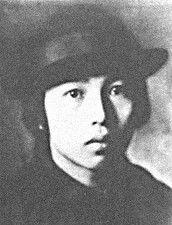
(1907–1937)
Chūya Nakahara was a Japanese poet known for his lyrical and emotionally resonant verse. Born in Yamaguchi Prefecture, he began writing poetry at a young age, influenced early on by French Symbolists such as Verlaine and Rimbaud. His work is marked by a deep musicality, reflecting both the rhythms of language and the undercurrents of personal grief.
Many of Nakahara’s poems explore themes of sorrow, loneliness, and impermanence—often drawn from his own experiences of loss, including the early death of his brother and his struggles with illness. Despite a short life—he died of tuberculosis at the age of 30—he left behind a body of work that continues to move readers with its delicate yet powerful expression.
Nakahara’s poetic voice stands apart in modern Japanese literature. With its blend of romantic sensitivity and avant-garde experimentation, his writing remains widely studied and admired in Japan. While less known internationally, his poetry is increasingly being appreciated through translation and cross-media interpretations.
This site presents selected works of Nakahara alongside musical and spoken-word adaptations, offering a new way to experience the poignant cadence of his poetry.