
臨終/中原中也
Rinjuu / Chūya Nakahara
黑馬の瞳のひかり
水涸れて落つる百合花
あゝ こころうつろなるかな
窓近く婦の逝きぬ
白き空盲ひてありて
白き風冷たくありぬ
その腕の優しくありぬ
朝の日は濡れてありぬ
水の音したたりてゐぬ
子等の聲もつれてありぬ
しかはあれ この魂はいかにとなるか?
うすらぎて 空となるか?
Literal Translation
Autumn sky, a dull gray light—
in the black horse’s eyes, a glint.
Water gone; a lily falls.
Ah—how hollow the heart.
No god, no compass.
Near the window—the woman gone.
Blank, the white sky.
Cold, the white wind.
At that window—her hands washed my hair,
and her arms were tender.
Morning sun overflowed,
water whispered and fell.
Towns awoke,
children’s voices tangled in the air.
—Yet this soul, what is its end?
Fading thin—will it become sky?
Note: This is an extremely literal translation, strictly adhering to the syntax (word order) of the original Japanese. Please imagine the scenes in the order of the words.
Poetic Translation “Vanishing”
The autumn sky is dark, heavy, and somber.
Does the black horse’s gaze hold the same dull sky?
The lily, having lost its water, simply falls.
Ah—my heart feels hollow within.
There is neither God nor any guiding light,
and the woman seen at that window has now vanished.
The white sky is only there,
the white wind simply cold.
At the window, my hair washed,
her arms were always so tender.
Bathed in the morning light,
the sound of dripping water was comforting.
The towns were stirring, alive,
children’s voices echoed from the streets.
But even so—what will become of this soul?
Will it slowly fade away and become the sky?
Translation ©Tsukiyonokarasu, 2025
Original poem by Nakahara Chuya (Public Domain)
I’ve approached each poem with care and time—reading, translating, listening, and creating—always as a quiet collaboration with the poet.
These works reflect not just the poem itself, but also the moments of silence, discovery, and emotion that arose between us.
You’re invited into that space—not to copy, but to feel.
Echoes from Chūya’s Ink
-
This page weaves together Chuya Nakahara’s Japanese translation of Rimbaud’s Sensation, my own English interpretation based on Nakahara’s text, and fragments of the original French poem. By blending these voices, the song becomes a layered conversation across time and language—an homage to the resonance between two poetic souls. Unfold the Rest
-
Nakahara Chuya’s poem Rinju (“At Deathbed”) is translated into English and reimagined through music. It depicts the quiet passage of a soul fading into the sky, a gentle elegy for what has been lost. The original poem, its translation, the translator’s notes, and the accompanying music and video together form a single, unified world. Unfold the Rest
-
Experience Nakahara Chuya’s Moonlit Shore in multiple forms—literal translation, interpretive rendering, musical adaptation, and a translator’s note reflecting on grief, memory, and poetic silence. Unfold the Rest


About Chūya Nakahara
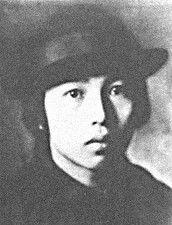
(1907–1937)
Chūya Nakahara was a Japanese poet known for his lyrical and emotionally resonant verse. Born in Yamaguchi Prefecture, he began writing poetry at a young age, influenced early on by French Symbolists such as Verlaine and Rimbaud. His work is marked by a deep musicality, reflecting both the rhythms of language and the undercurrents of personal grief.
Many of Nakahara’s poems explore themes of sorrow, loneliness, and impermanence—often drawn from his own experiences of loss, including the early death of his brother and his struggles with illness. Despite a short life—he died of tuberculosis at the age of 30—he left behind a body of work that continues to move readers with its delicate yet powerful expression.
Nakahara’s poetic voice stands apart in modern Japanese literature. With its blend of romantic sensitivity and avant-garde experimentation, his writing remains widely studied and admired in Japan. While less known internationally, his poetry is increasingly being appreciated through translation and cross-media interpretations.
This site presents selected works of Nakahara alongside musical and spoken-word adaptations, offering a new way to experience the poignant cadence of his poetry.