
月夜の濱邊/中原中也
Tsukiyo no Hamabe / Chūya Nakahara
波打際に、落ちてゐた。
僕は思つたわけでもないが
なぜだかそれを捨てるに忍びず
僕はそれを、袂に入れた。
波打際に、落ちてゐた。
僕は思つたわけでもないが
月に向つてそれは抛れず
浪に向つてそれは抛れず
僕はそれを、袂に入れた。
指先に沁み、心に沁みた。
どうしてそれが、捨てられようか?
Literal Translation
On a moonlit night, a single button
at the water’s edge, had fallen.
To pick it up and make use of it—
I didn’t exactly think that,
but somehow, I could not find it in me to throw it away
so I put it into my sleeve.
On a moonlit night, a single button
at the water’s edge, had fallen.
To pick it up and make use of it—
I didn’t exactly think that,
toward the moon, I could not cast it
toward the waves, I could not cast it
so I put it into my sleeve.
The button I picked up on a moonlit night
seeped into my fingertips, seeped into my heart
The button I picked up on a moonlit night—
how could it ever be thrown away?
Poetic Translation
On a moonlit night—
a button, alone,
lay at the shore.
I hadn’t meant to use it,
hadn’t thought to make it mine—
but I couldn’t throw it toward the moon,
and of course, not to the waves.
So I tucked it gently into my sleeve.
On a moonlit night—
a button, alone,
waiting at the shore.
I didn’t mean to keep it,
didn’t plan to make it mine—
but I couldn’t throw it toward the moon,
and of course, not to the waves.
So I tucked it softly into my sleeve.
The button I found that moonlit night—
as if it had waited at the shore—
it sank into my fingertips,
and quietly merged with my heart.
The button I found that moonlit night—
as if it had waited at the shore—
how could I ever let it go?
Translation ©Tsukiyonokarasu, 2025
Original poem by Nakahara Chuya (Public Domain)
I’ve approached each poem with care and time—reading, translating, listening, and creating—always as a quiet collaboration with the poet.
These works reflect not just the poem itself, but also the moments of silence, discovery, and emotion that arose between us.
You’re invited into that space—not to copy, but to feel.
Echoes from Chūya’s Ink
-
This page weaves together Chuya Nakahara’s Japanese translation of Rimbaud’s Sensation, my own English interpretation based on Nakahara’s text, and fragments of the original French poem. By blending these voices, the song becomes a layered conversation across time and language—an homage to the resonance between two poetic souls. Unfold the Rest
-
Nakahara Chuya’s poem Rinju (“At Deathbed”) is translated into English and reimagined through music. It depicts the quiet passage of a soul fading into the sky, a gentle elegy for what has been lost. The original poem, its translation, the translator’s notes, and the accompanying music and video together form a single, unified world. Unfold the Rest
-
Experience Nakahara Chuya’s Moonlit Shore in multiple forms—literal translation, interpretive rendering, musical adaptation, and a translator’s note reflecting on grief, memory, and poetic silence. Unfold the Rest


About Chūya Nakahara
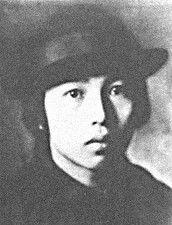
(1907–1937)
Chūya Nakahara was a Japanese poet known for his lyrical and emotionally resonant verse. Born in Yamaguchi Prefecture, he began writing poetry at a young age, influenced early on by French Symbolists such as Verlaine and Rimbaud. His work is marked by a deep musicality, reflecting both the rhythms of language and the undercurrents of personal grief.
Many of Nakahara’s poems explore themes of sorrow, loneliness, and impermanence—often drawn from his own experiences of loss, including the early death of his brother and his struggles with illness. Despite a short life—he died of tuberculosis at the age of 30—he left behind a body of work that continues to move readers with its delicate yet powerful expression.
Nakahara’s poetic voice stands apart in modern Japanese literature. With its blend of romantic sensitivity and avant-garde experimentation, his writing remains widely studied and admired in Japan. While less known internationally, his poetry is increasingly being appreciated through translation and cross-media interpretations.
This site presents selected works of Nakahara alongside musical and spoken-word adaptations, offering a new way to experience the poignant cadence of his poetry.